
Skip to content
  • Link to X Link to X Link to X
  • Link to Facebook Link to Facebook Link to Facebook
  • Link to LinkedIn Link to LinkedIn Link to LinkedIn
  • Link to Youtube Link to Youtube Link to Youtube
  • CROPTALK BLOG
  • Shopping Cart Shopping Cart
    0Shopping Cart
Goldcrop
  • Forage Seed
    • Grass Seed
      • Grass Seed Mixtures
      • White Clover
      • Red Clover
    • Maize & Beet
      • Maize
      • Beet
    • Brassica Fodder Crops
      • Fodder Rape Crop
      • Kale Crop
      • Swedes Crop
      • Stubble Turnips Crop
    • Breeding
      • Teagasc Forage Breeding Program
  • Arable Seeds
    • Cereals
      • Cereal Varieties Recommended Lists
      • Barley
      • Oats
      • Wheat
      • Triticale
      • Hybrid Rye
    • Catch Crops
      • Catch Crop Mixtures
    • Oilseed Rape
      • Winter Oilseed Rape
    • Pulses
      • Spring Beans
      • Winter Beans
      • Peas
  • Crop Protection
    • Adjuvant Range
    • Herbicide
    • Fungicide
    • Trace Element Range
    • Plant Growth Regulator
    • Insecticide
    • Slug Pellets
  • Amenity
  • Other Categories
    • Goldcrop Horticulture
    • Bird Food
    • Fencing
    • Lawn Seed
  • Resources
    • Croptalk Blog
    • Book a Speaker
    • Careers
    • Our Story
    • Goldcrop Catalogues
    • Contact Us
    • Agri Sales Team
    • Research and Development
      • Teagasc Forage Breeding Program
    • Goldcrop Partners Media Portal
  • Click to open the search input field Click to open the search input field Search
  • Menu Menu

Spring Oilseed Rape | What a Performer | Case Study by John Dunne

Spring Oilseed Rape, Arable Seeds

The spring of 2023, following a somewhat premature start, has turned out to be slow in getting going.

A record-breaking wet March gave way to a thus far mixed month of April with land remaining wetter than we would like and progress with the sowing of spring cereals quite a bit behind target.

We know that a well-established crop of spring barley, even when sown later than preferred, still has the potential to yield very well if it hits the ground running and has everything in its favour.

Spring Oilseed Rape (SOSR) could provide a very useful way of avoiding the challenge of sowing late-spring barley while at the same time introducing a break crop to land that may be in need of rotation.

Excerpt from the AHDB Spring OSR Descriptive List 2023

Excerpt from the AHDB Spring OSR Descriptive List 2023 | Click To Download PDF

Economically, based on current costings and grain prices (Teagasc crop costings 2023, green barley price of €215/tn, OSR price of €425/tn), a good crop of SOSR should at least match a good crop of late sown spring barley with the added benefits of rotation and spreading workload.

The yield potential of SOSR has increased greatly with the advent of newer hybrid varieties. These varieties have the vigour to establish quickly and to create a big canopy of pods in a short growing season.
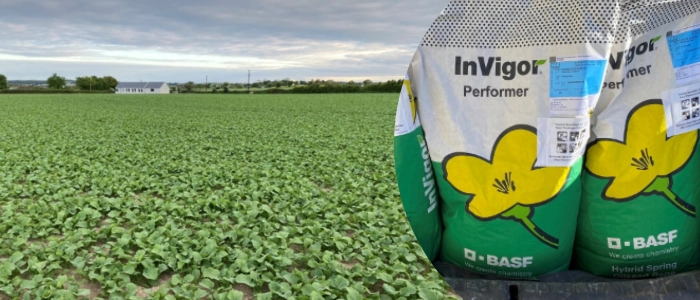
One such variety is PERFORMER, bred by BASF in Germany. First listed on the SOSR Recommended List (UK) in 2020, Performer has not yet been surpassed for its yield potential.

For the above reasons, I chose to grow two fields of PERFORMER SOSR on our own farm in 2022.

The background to my decision to grow Performer was 2-fold; firstly, the fields in question are slow to dry out in spring due to their heavy clay subsoil, and secondly, both fields had been growing spring barley with a number of years, and I was conscious that they would benefit from a break crop.

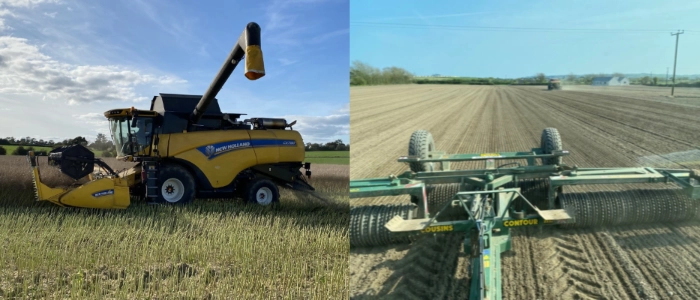
The crop was sown on the 28th of April using a plough and one-pass system. The sowing rate used was 80 seeds/m2 (1 pack to 2.6 Ha) to achieve 70 plants/m2.

NPK was mixed through the seedbed, and the seedbed was rolled immediately to encourage quick and even germination. Butisan S was applied as weed control immediately after rolling. An application of CAN+S was applied once tramlines were visible, bringing the total N used to 150kg/Ha.
The crop grew really quickly, with the vigour of the variety being quite apparent. The crop was monitored for flea beetle, but no control was required.

I desiccated the crop on the 1st of September with Glyphosate. Harvest was delayed due to broken weather. However, we harvested the crop in excellent conditions on the 21st of September, only 19 weeks after it was sown. The crop yielded a very pleasing 4.1T/Ha at 12-12.5% mc. The crop also qualified for the SIM Straw incorporation measure.

Once the crop was harvested, we gave the SOSR stubble one shallow run of a disc harrow to incorporate the chopped straw and also to lessen the risk of any slug survival following the crop.

Overall, PERFORMER spring OSR delivered a high-yielding and profitable crop for me in 2022 and provided an ideal entry crop for the first cereal in good time for autumn sowing. It must be considered as a viable rotational crop-option on farms, especially if a late spring season prevents alternative break crops like winter OSR, beans or oats from being sown.”

Article by John Dunne, Goldcrop Ltd. 

13 April 2023
https://goldcrop.ie/wp-content/uploads/2023/04/Vigor-Final-2.png 400 495 Robert Hawkes https://goldcrop.ie/wp-content/uploads/2021/07/Goldcrop-Logo-Colour.png Robert Hawkes2023-04-13 17:54:042023-04-14 15:11:53Spring Oilseed Rape | What a Performer | Case Study by John Dunne

Spring Barley Seeding Rate to Achieve Optimum Plant Population

Arable Seeds, Spring Barley

Barley needs plants – How to achieve the optimum plant population for yield.

It goes without saying that when we grow cereal crops, we want as much grain produced per square metre as possible. One of the critical factors in achieving this is the establishment of the optimum number of plants per square metre. The old adage “well sown is half grown” owes its origin to this thought process.
Those who regularly manage winter wheat, winter oilseed rape and to some extent oats will know just how these crops can adapt to compensate for lower plant numbers and still produce an adequate yield. These crops compensate by changing their canopy structure to produce more tillers and larger ears in the case of winter wheat and more branches in the case of oilseed rape. They can also set more seeds and redirect nutrients to fill larger seeds where space allows.
Barley however both winter and spring is different. Barley is quite limited in how it can produce a good yield when plant numbers are compromised. Barley can and will tiller where plants are missing but it cannot compensate with grain number and grain size like wheat. In other words, a high yielding crop of barley needs plants….

What are optimum plant numbers for maximum yield in spring barley?

Trials have shown that 300 plants/m2 for spring barley emerging in March/ early April is around optimum. As the planting date moves later (mid – end of April), this optimum moves a bit higher to approx. 310-320 plants/m2 due to lack of time for tillering.

How do we calculate a seed rate to establish our target plant population?

To calculate the target seed rate, we need to know the seed size (TGW in grams) and make an estimate on what rate of plant establishment we will achieve in the field. TGW will be printed on all Goldcrop supplied seed so that is the easy bit taken care of.
Estimating the establishment rate in field takes a bit more thought. A certain percentage of the seeds in a bag will not grow (certified seed must be at least 85% germination by law). In addition, a certain number of seeds will be lost in the field. Most treated certified spring barley seed will be between 90 & 100% germination. In good planting conditions, one can expect to lose at least 8-10% of seeds in field before emergence. Therefore, it is reasonable to expect to achieve 85% establishment (seed germination and field losses combined) when planting certified spring barley seed in good conditions. Losses can be quite a bit higher if the seed quality or seed bed quality is sub-optimum. I have even observed that soil type can have an impact on establishment rates with shaley soils rarely achieving 90% establishment due to coulter bounce when planting and seeds being covered by small stones. In general, my experience is that plant establishment rates in field are rarely as high as we would like due to an underestimation of in field seed losses. The practice of doing plant counts once the crop has emerged can be useful in getting a feel for what establishment rates you are achieving on your own soil type and will give you confidence in deciding seed rates in future years.

Well-established spring cereal crop 6 April 2023

Well-established spring cereal crop 6 April 2023

Seed Rate Calculation Formula

Seed rate (Kg/Ha) = Target Population (Plants/m2) x TGW (g)
bbbbbbbbbbbbbbbbbbbbbbEstablishment Rate (%)

Example of the seed rate calculation

Target plant population = 300 plants/m2
Seed TGW = 54 grams
Estimated establishment rate (combination of seed germination rate & in field loss) = 85%

300 x 54 = 190kg/Ha (12 stone/acre)
85

Note: allowance should be made where planting barley in very fertile situations such as after long term grass or on peaty soils. High plant numbers in such fertile locations can further increase lodging pressure and it may be advisable to reduce the target plant population.

Proof of the pudding…

In 2011, I decided to conduct a seed rate trial on winter barley. I had read about the requirement to have adequate plant numbers in barley to achieve high yields, I had my doubts as I had regularly seen the great tillering ability of winter barley and felt that it could probably compensate for low plant numbers by tillering.
Two varieties (Cassia and Saffron) were planted in plots at the Goldcrop trial site in Shanagarry to achieve 4 different plant populations in the case of each variety.
The results were illuminating and confirmed to me the limit of barley to compensate for lower plant numbers.

VarietyTarget Plant Population (Plants/m2)Yield (T/Ha at 15%mc)
Saffron2209.1
Saffron2508.8
Saffron3009.9
Saffron3509.0
Cassia2009.5
Cassia25010.0
Cassia30010.5
Cassia3509.8

Article by John Dunne, Goldcrop Ltd. 

6 April 2023
https://goldcrop.ie/wp-content/uploads/2023/04/Spring-Barley-Seed-Rates-1.webp 400 495 Robert Hawkes https://goldcrop.ie/wp-content/uploads/2021/07/Goldcrop-Logo-Colour.png Robert Hawkes2023-04-06 13:42:052023-04-07 10:37:57Spring Barley Seeding Rate to Achieve Optimum Plant Population

Clubroot Disease of Brassica Crops

Arable Seeds, Brassica Crops

The video below covers the topic of Clubroot Disease.

It is a disease that effects many crops which are grown by farmers, it is a long-term disease if one’s land becomes infected, so prevention is the best policy.

Top Tips 

  1. Clubroot Disease affects members of the Brassica family (Fodder Rape, Mustard, Oilseed Rape, Kale, Swedes, Stubble Turnip etc)
  2. Clubroot is a soil borne fungus and severely damages the root system of infected plants.
  3. Hosts include Charlock & Shepherds Purse
  4. Clubroot can cause 50% yield loss in Oilseed Rape
  5. Almost complete crop failure has been observed in severely affected fodder brassicas
  6. Clubroot remains viable in the soil for up to 15 years
  7. Rotation is the best way of preventing the disease (no closer than 1 year in 3 for Brassicas, preferably 1 year in 5).
  8. Easily spread on soil by machinery, footwear and grazing animals
  9. Soil pH of over 7 and high Calcium levels can lower the severity of the disease
  10. Do not use Brassica cover crops if Oilseed Rape is in the rotation
  11. Over reliance on resistant varieties can select for resistant Clubroot disease


15 January 2023
https://goldcrop.ie/wp-content/uploads/2023/01/Clubroot-Disease-of-Brassica-Crops.webp 400 495 Robert Hawkes https://goldcrop.ie/wp-content/uploads/2021/07/Goldcrop-Logo-Colour.png Robert Hawkes2023-01-15 16:28:212023-01-15 16:28:21Clubroot Disease of Brassica Crops

Tundra Winter Bean Husbandry Guide

Winter Beans

TUNDRA WINTER BEAN HUSBANDRY GUIDE

Winter beans are closely related to spring beans but are more tolerant of winter weather and are slower developing. Winter beans do not have a vernalisation requirement and their seed size is usually larger.

Winter beans can be expected to ripen 7-10 days earlier than a spring bean crop sown in March.

The area sown to winter beans has remained limited in Ireland in recent years as growers have chosen to grow spring beans instead. However, spring beans have demonstrated a relatively unreliable performance. This unreliability is often caused by late sowing in the spring and consequent flower abortion in the crop when it encounters even a short lived drought.

Winter beans are not without their challenges either. In the past, two main challenges occurred when winter beans were grown

  1. Crows causing seed and seedling loss,

  2. High disease pressure from Chocolate Spot and consequently high fungicide costs

The guidelines presented here are partly based on trial work conducted by Goldcrop to negate the above two challenges when growing winter beans in Ireland.

Site Selection & Sowing

Beans in general prefer heavier soils which are less drought susceptible. However, beans do not like compaction or overly fine seedbeds. Beans are well able to tolerate relatively cloddy seed beds but too rough a seed bed can result in a reduced effectiveness of residual herbicides and encourage slugs.

Beans (or peas) should not be planted more frequently than 1 year in 5 in a rotation.

Ensure that there are no bean volunteers in close proximity to a new winter bean crop; such volunteers can infect the winter bean crop with Ascochyta, a disease for which there is no effective control.

Winter beans should be sown to a consistent depth of 3-4 inches; this puts the seed too deep for crows. Consistent seed depth is very important as it results in uniform establishment and less chance of crows being attracted to shallow seeds.

Only certain seed drills can place seed to this depth. Strip till drills such as SUMO DTS, Claydon etc are ideal. Conventional cereal drills will struggle to achieve depth. Shallowing ploughing down of the seed is an alternative; however, this can result in uneven seed depth and emergence.

Uniform emergence of the crop will make herbicide timing easier and shorten the time in which crows can attack.

Seed rate must be calculated based on the seed size (TGW), germination rate of the seed and expected field losses. Field losses in the absence of crow damage can be expected to be approx 10-15%.

Target plant population for Tundra beans is 24-28 plants/m2. This is lower than spring beans but winter beans will branch and tiller where space is available.

The target sowing date for Winter beans is from mid-November to early December, dependant on region with the earlier sowing date preferable in more northerly latitudes. Sowing too early will result in higher foliar disease pressure and control costs.

Fertiliser & Nutrition

Beans do not have a Nitrogen requirement as they fix Nitrogen from the atmosphere.

Any P required should be placed in the seedbed at sowing time. K can be also be placed or broadcast on afterwards.

Beans respond to Trace elements where they are required. Requirements should be based on soil tests and Leaf tissue analysis.

Beans do not like acidic soil conditions; optimum pH is 6.5 – 7.

Weed Control

Weed control in winter beans must be applied prior to crop emergence. Emergence from a sowing depth of 3-4” can be expected to take 3-4 weeks.

Goldcrop have had excellent results from applying a mix of Glyphosate (3L/Ha) and Nirvana (4L/Ha) just before crop emergence. The Glyphosate kills any existing weeds and the Nirvana prevents any further weed development.

By delaying herbicide application till just before crop emergence, the residual component of the herbicide is less exposed to leaching from winter rains. The herbicide will also be applied onto a surface which has been sealed in the time interval since sowing.

Planting using strip till as opposed to ploughing should also result in a seedbed which is better able to carry the weight of a sprayer.

Disease Control

The two main diseases encountered in winter beans are Chocolate Spot & Downy Mildew. Both are best controlled with preventative action. By avoiding sowing winter beans too early, the onset of disease pressure in the spring is delayed.

Goldcrop have found that a 3 spray program based on Signum for Chocolate Spot & Bean Rust control to be very reliable. The first application (0.75kg/Ha) is applied at the beginning of flowering. Two further applications (0.75kg followed by 0.5kg) are applied at 3 week intervals.

Downy Mildew can be well controlled by applying Basfoliar Activ before symptoms arise or just at the very early onset of symptoms.

5 tips for successful establishment

1. Site selection is important

  • heavier soils best, soil pH must be >6.5
  • no beans in rotation for previous 5 years
  • don’t sow near a crop of volunteer beans / near cover crops containing beans (risk of Ascochyta infection)

2. Don’t sow too early

– after mid-November to mid-December is best

3. Sow TUNDRA at 8-10cm / 3-4 inches depth to avoid crow damage.

Direct drill methods work well, especially into stubble ground / standing
cover crops which can increase surface soil tilth.

4. Sowing rate should be 30 – 35 seeds per sq metre

– check TGW & Germination % of seed being drilled

5. All herbicides should be applied before crop emergence

For more information on growing a successful crop of winter beans, please contact John Dunne

john.dunne@goldcrop.ie  Tel: 087 280 2971
9 November 2020
https://goldcrop.ie/wp-content/uploads/2020/11/Winter-beans-in-flower-uai-600x600-1.jpg 600 600 Robert Hawkes https://goldcrop.ie/wp-content/uploads/2021/07/Goldcrop-Logo-Colour.png Robert Hawkes2020-11-09 13:58:042021-07-23 15:52:36Tundra Winter Bean Husbandry Guide
Page 2 of 212
Search Search

Sign Up Croptalk Newsletter

Categories

  • Arable Seeds
  • Beet
  • Brassica Crops
  • Certified Seed
  • Fodder Rape
  • Forage Seed
  • Grassland
  • Maize
  • Oilseed Rape
  • Pasture Profit Index
  • Press Release
  • Red Clover
  • Research
  • Reseeding
  • Spring Barley
  • Spring Oilseed Rape
  • Top Tips
  • White Clover
  • Winter Barley
  • Winter Beans
  • Winter Oilseed Rape
  • Winter Wheat

Product Ranges

  • Arable
  • Forage
  • Crop Protection
  • Goldcrop Amenity
  • Goldcrop Horticulture
  • Fencing
  • Lawn Seed

Locations

Springhill, Carrigtwohill, Co. Cork T45 F685 Ireland

Killavullen, Mallow, Co. Cork P51 CK38 Ireland

Cluide, Dunleer, Co. Louth A92 DK88 Ireland


Product Range

  • Arable
  • Forage
  • Crop Protection
  • Goldcrop Amenity
  • Goldcrop Horticulture
  • Fencing
  • Lawn Seed

Quick Links

  • Agri Sales Team
  • Contact Us
  • Croptalk Blog
  • Our Story
  • Careers
  • Goldcrop Catalogues
  • Book a Speaker
  • Pasture Innovations
  • Accessibility statement
  • Goldcrop Partners Media Portal

Connect

  • Twitter
  • Facebook
  • LinkedIn
  • YouTube
© Copyright - Goldcrop | website & marketing by Method Marketing
  • Link to X Link to X Link to X
  • Link to Facebook Link to Facebook Link to Facebook
  • Link to LinkedIn Link to LinkedIn Link to LinkedIn
  • Link to Youtube Link to Youtube Link to Youtube
Scroll to top Scroll to top Scroll to top