
Skip to content
  • Link to X Link to X Link to X
  • Link to Facebook Link to Facebook Link to Facebook
  • Link to LinkedIn Link to LinkedIn Link to LinkedIn
  • Link to Youtube Link to Youtube Link to Youtube
  • CROPTALK BLOG
  • Shopping Cart Shopping Cart
    0Shopping Cart
Goldcrop
  • Forage Seed
    • Grass Seed
      • Grass Seed Mixtures
      • White Clover
      • Red Clover
    • Maize & Beet
      • Maize
      • Beet
    • Brassica Fodder Crops
      • Fodder Rape Crop
      • Kale Crop
      • Swedes Crop
      • Stubble Turnips Crop
    • Breeding
      • Teagasc Forage Breeding Program
  • Arable Seeds
    • Cereals
      • Cereal Varieties Recommended Lists
      • Barley
      • Oats
      • Wheat
      • Triticale
      • Hybrid Rye
    • Catch Crops
      • Catch Crop Mixtures
    • Oilseed Rape
      • Winter Oilseed Rape
    • Pulses
      • Spring Beans
      • Winter Beans
      • Peas
  • Crop Protection
    • Adjuvant Range
    • Herbicide
    • Fungicide
    • Trace Element Range
    • Plant Growth Regulator
    • Insecticide
    • Slug Pellets
  • Amenity
  • Other Categories
    • Goldcrop Horticulture
    • Bird Food
    • Fencing
    • Lawn Seed
  • Resources
    • Croptalk Blog
    • Book a Speaker
    • Careers
    • Our Story
    • Goldcrop Catalogues
    • Contact Us
    • Agri Sales Team
    • Research and Development
      • Teagasc Forage Breeding Program
    • Goldcrop Partners Media Portal
  • Click to open the search input field Click to open the search input field Search
  • Menu Menu

Winter Oilseed Rape – Sticking With The Plan!

Arable Seeds, Winter Oilseed Rape

Winter Oilseed Rape

As a farmer, I am quite a fan of rotation. However, we were not always using rotation on our farm and up until 2007, our rotation (or lack of!) consisted of continuous spring barley. While the spring barley cropping was relatively simple, it did bring workload bottlenecks and yields that were only average.

In 2007, we grew our first two fields of WOSR and in all honesty, we haven’t looked back.

WOSR has become a critical part of our rotation, and it has brought increased cereal yields, a spread to our workload and a great way to keep on top of grass weeds.

Our current rotation generally consists of two consecutive cereal crops followed by a break crop (WOSR or beans every second time).

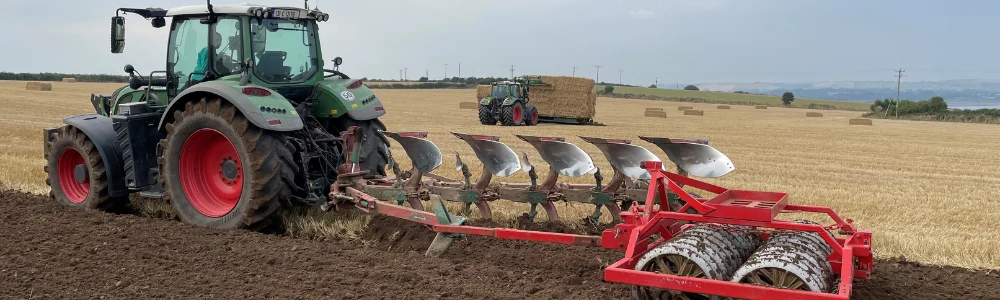
Autumn 2023 / Spring 2024 as we know, was a difficult harvest year to establish crops. We are now preparing to sow our WOSR crop for harvest 2025. This year, our entry crop is a crop of spring barley sown on the 22nd April and harvested a week ago. That barley crop yielded very well and the straw has been cleared. We are in the process of ploughing it so that we can sow WOSR (LG Armada) before my absolute cut-off date of the 20th September.

September might to some sound “late” for sowing WOSR. However, given our southerly latitude and the fact that the soil is currently in superb condition, I have no concerns about the sowing date. In fact, over the past 16 years, I can only remember sowing our WOSR in August on one occasion!

Over that time, our WOSR yields have averaged approximately 5tn/Ha (2tn/Ac). A large part of this consistently good yield performance is due to the genetic improvements in the WOSR varieties being grown. Increased seed yield and useful traits such as resistance to Pod Shatter & TuYV, N-Flex, Sclero-Flex etc have all made WOSR too attractive for me to ignore.
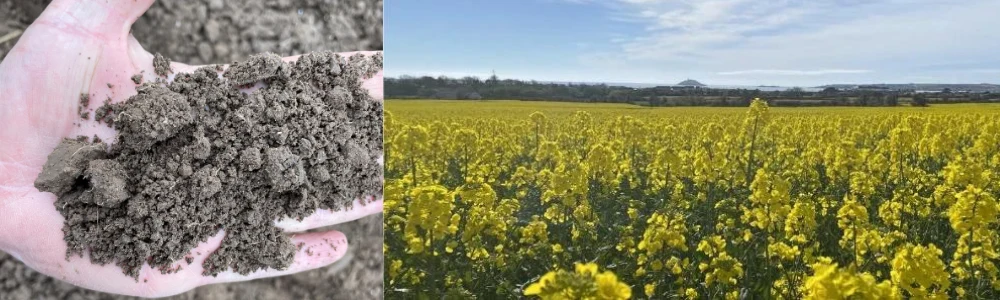
Winter Oilseed Rape Sowing

The reasons that I am not concerned about this sowing date are as follows:

  • Our historic yields from September sown WOSR have been very good.
  • Modern varieties are almost exclusively hybrids which possess vigour for quick establishment.
  • Following the low rainfall summer of 2024, the soil is in fabulous condition and this should lead to good seed beds and an excellent start for the crop.

Other considerations that are on my mind are that I want to maintain our rotational plan and also the fact that sowings of WOSR in the UK and other European countries are likely to be heavily reduced this autumn due to the problem of Cabbage Stem Flea Beetle. Thankfully, I have not experienced a problem with this pest while growing WOSR. If sowings in the large countries are reduced, this should only have a positive effect on prices next harvest.

In order to maximise establishment, I concentrate on creating a fine seed bed. WOSR is a small seed and good seed/soil contact is critical. NPK fertiliser will be incorporated in the seed bed to give the seedlings immediate access to nutrients. A reduced rate of slug pellets will be applied after rolling as a matter of course.

The seed rate used will be approximately 50 seeds/m2. We sometimes use strip tillage for planting WOSR and in those cases, I increase the seed rate to allow for the lower establishment rate that is commonly experienced with strip tillage.
John Dunne Goldcrop Article by John Dunne, Goldcrop Ltd.

10 September 2024
https://goldcrop.ie/wp-content/uploads/2024/09/Winter-Oilseed-Rape-–-Sticking-With-The-Plan.webp 400 495 Robert Hawkes https://goldcrop.ie/wp-content/uploads/2021/07/Goldcrop-Logo-Colour.png Robert Hawkes2024-09-10 13:30:132024-09-10 13:44:52Winter Oilseed Rape – Sticking With The Plan!

Winter Oilseed Rape (WOSR) Experiences on the Dunne Farm East Cork

Arable Seeds, Winter Oilseed Rape
LG Auckland April 2nd 2023

LG Auckland April 2nd 2023

I farm in East Cork with my brother Alan, and since moving away from a spring barley monoculture in 2007, we have become firm believers in rotation. This rotation includes Winter Oilseed Rape, Beans, Winter Wheat, Winter Barley and Spring Barley.
The reasons we use rotation can be summarised as follows:

  • Break crops in the rotation lead to higher cereal yields.
  • Rotation spreads the workload and weather-related risk.
  • Break Crops provide an opportunity to control grass weeds.
  • Rotation improves soil health through N fixation (legumes) and the incorporation of crop haulm.

Winter Oilseed Rape has had a place in our rotation ever since we first grew it in 2007. We immediately saw a lift in our spring barley yields and now have moved to grow more winter wheat to capture the yield benefit of the preceding break crop fully.

We try to grow WOSR every 6th year, using cereals and beans in the intervening years. I am a firm believer in the phrase,

“The less often you grow any crop, the better it will perform”.

Over these 17 years, we have learnt a lot about growing the WOSR crop and have seen great improvements in the genetics available in the varieties; more on this later.

Planting LG Auckland 1 Sept 22

Planting LG Auckland 1 Sept 22

The 2023 Crop

This year’s crop (LG Auckland) was sown on Sept 1st, following spring barley. The land in question had grown an excellent crop of spring barley in 2022 (4tn/ac), and it would have been tempting to go with spring barley again for 2023, but I wanted to stick with the planned rotation and something in my gut reminded me that it might be good to not be completely exposed to August as our sole harvest month in 2023. For the same reason, we planted a couple of fields of Winter Barley (not a crop that we commonly grow); little did I know how this would transpire…..

LG Auckland established Sept 29th 2022

LG Auckland established Sept 29th 2022

Establishment

The LG Auckland was planted using strip tillage (Sumo DTS planter); the stubble had received a run of a disc harrow prior to planting to increase the level of tilth on the surface and to lessen any slug pressure. I like strip tillage for WOSR as the leading shank of the planter creates a compaction-free channel under the seedling which allows the root to grow vertically unimpeded by compaction. In addition, the strip tillage loses less soil moisture which was important in the summer of 2022.

The target plant population was 40 plants/m2. 52 seeds/m2 were planted, assuming an establishment rate of approx. 75%. In a plough-based system, the establishment rate would be expected to be higher through better seed placement when compared to strip tillage.
The crop’s P&K requirements, along with a small amount of N was applied at planting.

The crop was established well, and weed control consisted of an early application of a graminicide followed by a post-emergence application of Legion.
No fungicide was applied in the autumn as the land became untrafficable.

LG Auckland Oct 20th 2022 (2)

LG Auckland Oct 20th 2022 (2)

The Growing Season

Thankfully, disease levels (Light Leaf Spot and Phoma) appeared to be negligible in the spring (LG Auckland has very good disease ratings). Our climate can lend itself to high levels of Light Leaf Spot, which can be very difficult to control chemically if it becomes established. A fungicide (0.6L/Ha Proline) was applied at stem extension along with Epso Bortop (Mg, S & Boron). A second fungicide (0.8L/Ha Prosaro) was applied at mid-flowering with a second application of Epso Bortop. Caryx was also applied at early stem extension as a PGR.

The Nitrogen input for the crop was curtailed as it had, for the most part, developed a high Green Area Index by spring. However, I had another reason to cut back on N: Parts of the field had sat very wet over winter and into the spring, so much so that I felt that the rooting in these areas was heavily compromised. With concerns over the rooting in these areas and consequent lodging in my mind, I applied a total of 120 units/ac (150kg/Ha) of N to the crop; 30 units of this were left until just before the crop was too tall to spread fertiliser (late N can benefit the yield of WOSR by increasing seed size).

Harvesting LG Auckland 25th July 2023

Harvesting LG Auckland 25th July 2023

The crop of LG Auckland was harvested on the 25th of July. The yield of the crop came in at 2.1tn/ac (5.2tn/Ha) in a moisture range of 9-10% and it was sold to Dairygold. I was delighted with the yield considering how waterlogged some of the fields had been over winter and also considering the relatively low nitrogen input. A crop of KWS Dawsum winter wheat is the next crop planned for this land.

Improved Genetics

Since we first started growing WOSR, we have seen great advances in the yield potential and specific traits available in the modern WOSR varieties. Pod Shatter is something that, for us as growers, is non-negotiable; I will not grow a variety without it, and Goldcrop will only sell varieties that have this trait. (varieties with Pod Shatter Resistance include DK Expansion, DK Expose, LG Ambassador, LG Auckland and LG Armada).

Because of our mild climate, TuYV (Turnip Yellows Virus) is a common disease of WOSR in Ireland, varieties are available from Goldcrop with TuYV resistance, and this trait brings an extra level of consistent performance to WOSR in Ireland (varieties with TuYV resistance include LG Auckland, LG Ambassador, LG Armada and DK Expose).


Goldcrop Winter Oilseed Rape (WOSR) Seed Variety List 2023


Click for PDF Download


Article by John Dunne, Goldcrop Ltd.

3 August 2023
https://goldcrop.ie/wp-content/uploads/2023/08/LG-Auckland.webp 400 495 Robert Hawkes https://goldcrop.ie/wp-content/uploads/2021/07/Goldcrop-Logo-Colour.png Robert Hawkes2023-08-03 17:41:342023-08-04 09:57:39Winter Oilseed Rape (WOSR) Experiences on the Dunne Farm East Cork

Stubble Cultivation for Slug Control Following Winter Oilseed Rape

Arable Seeds, Top Tips, Winter Oilseed Rape

Top Tips


✔︎ Stubble cultivation should be immediately after harvest before slugs move deeper.

✔︎ Cultivation should be carried out in good drying conditions to maximise desiccation of slugs and their eggs.

✔︎ Don’t cultivate too deeply, 2 inches is ideal. You do not want to bury the slugs and their eggs.

✔︎ A loose, unfirmed surface is ideal to ensure good drying out of the soil.

✔︎ Repeat 3 weeks later for best effect.

✔︎ Always check for slugs and eggs prior to planting a cereal after WOSR.


Article by John Dunne, Goldcrop Ltd.

2 August 2023
https://goldcrop.ie/wp-content/uploads/2023/08/Stubble-Cultivation-495-×-400px.webp 400 495 Robert Hawkes https://goldcrop.ie/wp-content/uploads/2021/07/Goldcrop-Logo-Colour.png Robert Hawkes2023-08-02 18:14:512023-08-04 10:39:07Stubble Cultivation for Slug Control Following Winter Oilseed Rape
Search Search

Sign Up Croptalk Newsletter

Categories

  • Arable Seeds
  • Beet
  • Brassica Crops
  • Certified Seed
  • Fodder Rape
  • Forage Seed
  • Grassland
  • Maize
  • Oilseed Rape
  • Pasture Profit Index
  • Press Release
  • Red Clover
  • Research
  • Reseeding
  • Spring Barley
  • Spring Oilseed Rape
  • Top Tips
  • White Clover
  • Winter Barley
  • Winter Beans
  • Winter Oilseed Rape
  • Winter Wheat

Product Ranges

  • Arable
  • Forage
  • Crop Protection
  • Goldcrop Amenity
  • Goldcrop Horticulture
  • Fencing
  • Lawn Seed

Locations

Springhill, Carrigtwohill, Co. Cork T45 F685 Ireland

Killavullen, Mallow, Co. Cork P51 CK38 Ireland

Cluide, Dunleer, Co. Louth A92 DK88 Ireland


Product Range

  • Arable
  • Forage
  • Crop Protection
  • Goldcrop Amenity
  • Goldcrop Horticulture
  • Fencing
  • Lawn Seed

Quick Links

  • Agri Sales Team
  • Contact Us
  • Croptalk Blog
  • Our Story
  • Careers
  • Goldcrop Catalogues
  • Book a Speaker
  • Pasture Innovations
  • Accessibility statement
  • Goldcrop Partners Media Portal

Connect

  • Twitter
  • Facebook
  • LinkedIn
  • YouTube
© Copyright - Goldcrop | website & marketing by Method Marketing
  • Link to X Link to X Link to X
  • Link to Facebook Link to Facebook Link to Facebook
  • Link to LinkedIn Link to LinkedIn Link to LinkedIn
  • Link to Youtube Link to Youtube Link to Youtube
Scroll to top Scroll to top Scroll to top